Environmental Blogs, Habitat, Ecology, Endangered Species


Frog Blog - Nature Science Research Ecology

Green Mutual Fund Investing Info

Chitika

Twitter / elephantfamily

Twitter / savethefrogs

These Come From Trees Blog

Sunday, March 2, 2008

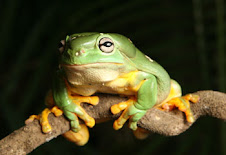
Toronto Zoo launches campaign to save frogs from chytrid fungus

article by Joanna Smith, TheStar.com

The Toronto Zoo chose "leap day" to raise awareness about an unprecedented crisis threatening amphibians around the world.

Cute gimmicks aside, zoo workers and local politicians gathered in front of frogs, toads and reporters yesterday to speak about the global amphibian problem and what they are trying to do about it.

"This is an extinction crisis that is unprecedented in the history of the world," said Bill Peters, national director of the Canadian Association of Zoos and Aquariums.

Frogs and other amphibians have managed just fine for the past 360 million years, but now up to half of the 6,000 known amphibian species face extinction within the next few decades. Pollution, loss of habitat and overharvesting continue to be problems. But the big killer around the world is actually an infection called chytrid fungus.

"That fungus attacks the skin of the frogs. It can no longer take in oxygen or water and they die," said Bob Johnson, curator of reptiles and amphibians at the zoo.

About 120 species have already gone extinct and many others are threatened around the world.

The killer infection originated in South Africa and spread quickly throughout Asia, Central and South America, and has arrived in the United States and Canada.

Johnson said the disease is especially difficult to deal with because even natural conservation parks and other wildlife havens provide no protection against it.

The zoo declared 2008 the Year of the Frog to celebrate the opening of its amphibian breeding centre to the public. The zoo launched a breeding program for Puerto Rican crested toads in 1986 and has since released 52,000 of the animals, once thought to be extinct, back into the wild.

The zoo will also open a frog rescue centre this summer to increase the number of animals they will be able to quarantine from the fungal disease. "There is a worldwide effort of scientists trying to fix the problems in the wild and we're holding the animals here in trust so that they can go back hopefully in the near future," Johnson said.

Natural Resources Minister Donna Cansfield said the province is ironing out legislation to protect 128 plant and animal species.


More suggested browsing:


Solar Intelligence Blog - For Alternative Energy News, World Peace Movements


A Green Realtor Blog - Eco-friendly Realty, Bio-realtors, Green building links

Saturday, January 12, 2008

Which trees produce the most oxygen?

An interesting question for sure, and though the answer is not yet known, in the excerpt below from an article / post by Anna Fraser, webmother of The-Tree.org.uk, she mentions that the contenders may include such diverse tree species as Monterey Pine, Hybrid Poplar, Eucalyptus and Fig:

Pick a tree that you are interested in and research the annual wood production for this species in the geographical location of your choice (the figures available are most probably given per hectare or per acre rather than per tree). Find out the energy value of the wood and the annual caloric intake of a human being. Using these figures, you can calculate what you would need to produce enough oxygen for one human being without even knowing how much oxygen they produce.

NASA does research on this using crops and they can produce enough oxygen for one human being with 20 square metres of land.

However we can of course speculate, keeping in mind that trees produce excess oxygen whilst growing and putting on wood (of course when they decay in old age the reverse will be true). Therefore the biggest oxygen producers will be the trees which have the fastest ability to convert the air and the soil they feed on into wood.

Opinions are divided which tree deserves this accolade and the reason for this disagreement is that the growth pattern of trees is inevitably affected by local conditions, such as poor or rich soil, sunshine wind and humidity, which side of the hill does it grow, what helpful fungi are there in the soil and various other factors. A Douglas Fir that can grow up to an amazing 300 ft in a given period in Oregon, may 'only' grow a 100 feet high in the south of California in that same period, because trees have their favourite spot, where conditions for their growth are optimal.

Presently the contenders for the fastest accumulation of square feet of timber in the trunk are Pinus radiata (Monterey Pine). This has shown amazing growth of 8 to 10 feet a year in favoured conditions. It originates from a small coastal area in California and is one of the most popular timber trees in the southern hemisphere, particularly South America.

Hybrid Poplar (cross between European Black Poplar and the North American Eastern Cottonwood). This can also grow of the rate of 8 ft a year in favourable circumstances. Other fast growing trees that deserve a mention are Chitalpa, Chinese Elm, Eucalyptus, Locust tree, and Fig tree, not necessarily in any particular order.

There are of course also genetically engineered trees in the making, which will be trying to break all records. An example is the "Supatree", which is experimentally grown in a remote place in Australia. Investors in the genetic engineerin industry are told that this tree aims to grow as much 30 to 35 feet in the first year and will accomplish in 10 years time what a regular forest plantation tree takes 75 years to do.

This sounds fantastic in a world with dwindling resources (due to growing populations and the silly consumer attitude we have towards the natural world), but please remember that this is a tree which has been engineered far more for business interests, rather than with the Good of the Whole World in mind.

In my opinion the world needs biodiversity and its inherent creativity for survival of the Earth on which we all depend and therefore food and resource security. This is far more important than identical clones, which depend on fertilizer and fossil fuel based growing practices.

Maybe we will be forced to grow Supatrees if we carry on the way we are and squander our precious heritage. If I were a judge with blinkers on, ignoring the real needs of the Earth and therefore people, Supatree would no doubt they would be the winner of your contest as oxygen producers during growth.

But will the world be a better, safer or richer place with Supatree plantations all over the world???

I really appreciate your genuine search for the highest oxygen producing tree, but please allow me to suggest also that oxygen is not the only gift the trees to the wellbeing of the patients of a tuberculosis hospital. Nor necessarily the most important: trees clean air pollution in many different ways and heal also by their presence.

Trees have always been our friends, healers and providers .There is of course infinite beauty in trees and woodland, but there is far more to it than that:
There is something about the aura of trees, that can make you feel as if you're in the presence of a being greater than ourselves. I don't mean greater in statue, but in a knowledge deeper and wiser than most people have.

Few people fail to be impressed by wonderful beings like the Dalai Lama and feel better for meeting him. But many trees are to me like Dalai Lama's and everyone can seek their healing friendship.

Trees seem to know that the Earth is all one. One giant interacting web of life. The divisions between us are artificial and temporary. As a separate identity I give my own contribution to the consciousness/vibes of the Earth, but since I exist only by the grace of inhaling air, drinking water, eating food, interacting in countless ways to make my consciousness grow: How can I think I am not intimately related to everything else?


Full article / post continues at: Which tree species produces the most oxygen?


Conscious readers, renewable power investors, check out:


Best Alternative Energy Investing Websites


Windpower stocks, wind energy company info


Geothermal Energy Investing websites and blogs


Solar-Intelligence.com - Clean Energy as a Path to Peace

Pictures of Elephants; African Elephant Photos, Asian Elephant Herd


And, our good friend the Asian Elephant:


Thursday, January 3, 2008

Penn State U researchers says virus causing honeybee deaths

Breakthrough on mystery of vanishing honey bees

by Am Johal

article from: http://nation.ittefaq.com/issues/2007/12/31/news0019.htm

Over the past year, honey bees have been dying across North America in unprecedented numbers and, until this month, no one seemed to be able to prove beyond a reasonable doubt what the cause may have been.

What has been dubbed "colony collapse disorder" can work through a honey bee colony in a matter of weeks. Bees fly off to collect pollen, but never return -- or simply weaken and die in the hives. Beyond the larger effects on the food chain, the economic implications of these deaths are immediate because honey bees are integral to the pollination of tens of millions of dollars of cash crops in North America.

Scientists from Penn State University say they have found a connection between Israeli Acute Paralysis Virus (IAPV) and colony collapse disorder. In a conference call last week, researchers argued that the virus, in conjunction with other stress factors, is likely the cause of the disorder, which has resulted in a loss of 50-90 percent of North American bee colonies. It was originally discovered in Israel in 2004, the same year that Australian bees were imported in to the United States.

Colony collapse disorder has also been observed in Poland, Greece, Italy, Portugal and Spain, and unverified reports have surfaced in Switzerland and Germany. Cases have also been reported in India and Brazil.

David Hackenburg, a beekeeper near Tampa Bay, Florida, lost nearly 2,000 of his 3,000 hives in a matter of weeks last winter. He has since been raising the issue with university researchers, bureaucrats at state agencies and elected politicians. He has told a number of media outlets that new synthetic nicotine-based pesticides known as neonicotinoids, or neonics, are the major contributing factor. Researchers told IPS that further studies will include these pesticides as possible contributing factors. Some large environmental groups, like the Sierra Club, also believe that genetically modified food production could be a contributing factor. A comprehensive British study found that genetically modified crops in conjunction with powerful chemicals were harmful to bees, butterflies and birds.

Researchers from the Pennsylvania Department of Agriculture and other U.S. states have been conducting geographic database tests to understand the magnitude of the problem and whether linkages exist with colony collapse disorder.

But other scientists argue that there is scant evidence that the Bacillus thuringiensis toxin produced by genetically modified crops is a factor in the mass deaths of bees.

According to Science Daily, a team of scientists from Edgewood Chemical Biological Centre and the University of California at San Francisco have identified a virus and a parasite that are likely culprits in the recent deaths.

Penn State University's Colony Collapse Working Group had drawn no clear conclusions as to what the causative factors may be until this week. In July 2007, the U.S. Department of Agriculture released a "Colony Collapse Disorder Action Plan" which states, "The current strategy for addressing the CCD crisis involves four main components: 1) survey and data collection; 2) analysis of samples; 3) hypothesis-driven research; and, 4) mitigation and preventative action."

Dr. Mariano Higes, a scientist based in Guadalajara, Spain, has concluded that European honey bees suffering from colony collapse disorder fell victim to Nosema ceranae, a micro-sporidian fungus. The research team led by Higes has been investigating the issue since 2000 and ruled out any other causes. U.S. scientists have stated that although it may be a factor, it is not the only cause of the disorder.

Eric Mussen, a University of California Davis apiculture expert, believes that small variations in weather caused by climate change could affect the water, nectar and pollen the bees rely on. Mussen also argues that bees have many viruses, but it is their weakened immune systems that are making them susceptible to death. The first cases came to public view in late 2006. Since then, speculation has ranged about the causes from a diverse set of theories which range from new pesticides, genetically modified crops, agricultural products, climate change, viruses cell phones.

In the 1940s, there were an estimated 5 million managed bee colonies in North America. Now there are just over 2 million. Adverse weather conditions and hurricanes have also contributed to the heavy losses of bee colonies in recent years.

For example, the almond season begins in February for the bees, a cold season in North America which can affect their endurance. The economy of the almond season is particularly lucrative for those raising bee colonies. Migratory beekeeping is also widespread in the United States. Beekeepers earn more money renting bees out for pollination than they do from honey production. Bee keepers often truck their colonies to Florida, Texas, California and other states. Migratory beekeeping has been in practice in the United States since 1908. Climate change could also be a factor in weakening the bees and has affected the pollination of crops in many agricultural areas in North America. The value of crops for which honey bees are the prime pollinator is estimated to be in the 15-billion-dollar range in the United States. California's almond industry alone, which relies on pollination from honey bees, is worth 1.5 billion dollars.

Honey bees are not native to North America. Though indigenous plants can survive without them, the pollination from honey bees is instrumental for growing fruit and vegetables like apples, cherries, tomatoes, zucchinis, cantaloupes and many other crops. Dr. Leonard Foster, a University of British Columbia Assistant Professor of Biochemistry told IPS, "There is certainly something happening in the United States and it is difficult to say if it is due to a bacteria or fungus -- it is difficult to detect with the current methods."

"It could be various factors combined, but it is difficult to verify at this time -- climate change, antibiotics or the use of pesticides where bees may visit. We have various historical records that show that there are fluctuations with beehives every seven or eight years that are affected by weather conditions and crop yields. It is too early to draw conclusions yet."

Troy Fore, president of the American Beekeeping Federation, told IPS, "Lately, we haven't heard much since it is the summer season. The losses seem to be associated with the winter as it's the natural end of a colony's life cycle."

"I hear from beekeepers, but many have been damaged earlier in the year. The colonies that have been affected are not as productive," he added. "But we still have no smoking gun."

(This story is part of a series of features on sustainable development by IPS and IFEJ - International Federation of Environmental Journalists.)

Also suggested:


SolarIntell.com - Best Alternative Energy Websites and Blogs


Geotherma.info Geothermal Energy Technology

Friday, December 28, 2007

Uganda Forests Endangered by Sugar, Over-farming of Medicine

Sugar Cane Expansion and Roots Medicine Make Uganda's Forests Go Down

By Alexis Okeowo/Mabira Forest Reserve

article from: Time.com

Scientists are combing rain forests around the world for potential cures for cancer and other ailments, but the residents near Uganda's last rain forests are are not waiting around for a multinational drug company to discover their treasures first. They have always believed that there are cures in the plant life of the Mabira Forest Reserve, the green, leafy jungle that sprawls through the middle of the country. And so, locals seeking treatments for sexual impotence, cancer, malaria and other illnesses are simply taking plants from the forest, parts of which are already in danger of being razed to make room for the construction of a sugarcane plant.

For example, there is what the locals call the "sex tree," which grows deep in Mabira's dense, tropical bush. It is a skinny, scruffy, slow-developing plant with springy green leaves that is decidedly unremarkable. It has a lonely existence. Other members of its plant family have been uprooted by local aphrodisiac-seekers long ago.

"We need to think about conservation in a scientific way," says Dr Mauda Kamatenesi, a lecturer of botany at Uganda's Makarere University and a lead researcher on Mabira's medicinal plants. Kamatenesi is leading a drive to conserve plants such as Citropsis articulata, or the "sex tree." Also in danger of extinction in Mabira is Pronus africana, which is commonly used to treat malaria and some forms of cancer.

Kamatenesi believes that plants like the "sex tree" may have other medicinal properties besides treating sexual impotence and says that Uganda will miss out on drug discovery and manufacturing if the government does not protect the forest. Researchers also say that the plants' extinction would take a toll on local Ugandans who have been using the trees as herbal cures for generations. Says Kamatenesi: "We are losing out if we let these plants go extinct without doing more research. The people say that the medicines work."

Crunching leaves on the damp, muddy ground as he walks in the forest, Ibrahim Senfuma, a bird guide, says that he and his friends take Citropsis articulata to boost their sex drives. Locals either chew the roots and leaves of the plant (salt is added for flavor), or mix them in a half liter of water and then boil to make tea. Lowering his voice amid the crowing and squawking sounds of the forest, Senfuma confides: "I don't know if it is psychological, but it works. You feel stronger than before."

Nearby, sunlight streams from an opening in a thatch of trees onto Faziira Nakalama, a cook, as she proudly lists the ailments (her own and her neighbors') cured by the leaves and roots of the Pronus africana. "Decreased immunity, stomach pains, malaria... the forest is very important," Nakalama says.

A great deal of the forest may not be around much longer. Over a fourth of the rain forest is in danger of being cleared in order to make way for a sugarcane estate, if a plan by Uganda's President Yoweri Museveni is approved. Last year, Museveni ordered a study into the feasibility of clearing 7,000 hectares (17,000 acres) of the forest after a sugarcane company applied for permission to expand its farm. The study concluded that the sugarcane plan endangers rare trees and birds in the 30,000-hectare forest. At risk are 218 species of butterflies, 312 plant species and 315 bird species, including nine found nowhere else in the world.

Full article continues at: Ugandan Forest Endangered by Sugar Cane, Its Own Medicines

View also:

Guide to Alternative Energy Websites and Blogs


Solar Intelligence: Clean Energy as a Path to World Peace


Monday, December 24, 2007

Global Trees Campaign aims to save world's threatened tree species

Over 8000 tree species, 10% of the world's total, are threatened with extinction. Destruction of woodland and forest and unsustainable felling of valuable timbers are causing the loss of many important species. Very few of these endangered trees are being conserved in the wild. The Global Trees Campaign, a joint initiative between Fauna & Flora International (FFI), Botanic Gardens Conservation International (BGCI) and the UNEP World Conservation Monitoring Centre (UNEP-WCMC) in association with other partners around the world, is drawing attention to this global problem and finding solutions.

The Global Trees Campaign aims to save the world's most threatened tree species and their habitats through provision of information, conservation action and support for sustainable use. The campaign focuses on trees as flagship species for conservation of ecosystems and landscapes, and enables local people to carry out rescue and sustainable use operations. We are working in partnership with organizations around the world to save endangered trees.

Endangered Trees List from United Nations

A

African Blackwood, which is also known as Mpingo in Swahili is considered to be the national tree of Tanzania, despite the fact that it is native to 26 African countries, ranging from northern Ethiopia, to the south in Angola, also spreading from Senegal across to Tanzania.

Mpingo not only improves soil fertility, but is also good at maintaining soil stability. Its leaves offer feed for migrating herbivores and for domestic livestock. The mature African Blackwood trees are capable of surviving fires that destroy other vegetation in grasslands. The dark heartwood of Mpingo, is one of the most economically valuable timbers in the world.

B

Bois dentelle is a beautiful tree, endemic to the high cloud forest of Mauritius. Despite the fact that it has no commercial value, only two individuals are left. The most remarkable thing about the species are the flowers – sprays of white bell flowers with fine lacy petals that cover the tree in summer (January –March).

C

The Clanwilliam cedar is a species endemic to the Cederberg Mountains in the Western Cape Province of South Africa. A majestic tree of 6-18 meters in height, the Clanwilliam cedar is a rot-resistant, fragrant and visually beautiful timber that was extensively exploited for building, furniture and later on telegraph poles by European settlers in the eighteenth century.

D

The Dragon Tree is found on the Canary Islands, Cape Verde Islands, Madeira and Morocco. The Guanche people of the Canary Islands used the sap for mummification purposes. In Ancient Rome, Sangre de Drago (Dragon Tree) was used as a colorant and across Europe it has been used as a varnish for iron tools.

According to the Greek myth, "The Eleventh Labor of Hercules: The Apples of the Hespérides", the hundred-headed dragon, Landon, who was said to have been the guardian of the Garden of the Hespérides, was killed by either Hercules or Atlas in order to fulfill Hercules’ task to bring back three golden apples from the garden. As told in the myth, the trees known as 'Dragon Trees’ sprung from Landon's red blood, which flowed out upon the land.

The species is classified as being "Endangered" by Cape Verde, while it is identified as being extinct in the wild on Brava and Santiago where only planted specimens exist today.

H

The Honduras rosewood is found in Belize in Central America and produces timber, which is extremely valued on the world market because of its use in musical instrument production.

Since the Honduras Rosewood supplies hard, heavy, durable and very resonant timber, when struck, it gives off a clear, loud note and making it itself most highly valued in the production of orchestral xylophones and claves. It is also used to make thin covering for fine furniture and cabinets, , knife handles etc.

L

The Loulu is a palm endemic to the northernmost of the Hawaiian Islands chain with the most variety of plant species of any island in Hawaii. There are fewer than 300 individuals of the Loulu left, because of limited regeneration caused by seed predation by rats and pigs as well as competing plants.

M

The Monkey Puzzle is the National Tree of Chile. Nevertheless, there is at least of these trees in every botanical garden in Europe. Its local name is Pehuén and its existence has great historical and social importance to the people living in that area known as the Pehuenche, which means “people of Pehuén”. The seeds of the tree shape an important part of their diet.

The Monkey puzzle is also valued for its unique and natural beauty, which makes it an emblem of a national parks and provinces in both Chile and Argentina. The timber found from the Pehuén has a high mechanical resistance and moderate resistance to fungal decay, hence for its being used for beams in buildings, bridges, roofs, furniture, boat structures, thin covering etc. Monkey puzzle forests have been fast destroyed and degraded due to logging, fire and grazing.

N

Nubian Dragon Tree is found in Djibouti, Saudi Arabia, Somalia, Sudan, and Uganda and was once a widespread and abundant species.

It is one of the few species that can survive wide periods of drought in all parts of its scope, hence making it an important part of the desert ecosystem. The mature fruits of the Nubian Dragon tree are eaten and its sap and fruit may also have medicinal properties.

P

Pau brasil is the national tree of Brazil, making it have strong cultural links to Brazil’s social and economic history. The species is known for the dye extract taken from the heartwood, for which it has been exploited since 1501. Presently, the dye extract and its bark are used locally for medicinal purposes. Research is being carried out to find out whether the bark of this tree can be used as a cure for cancer.

Pau brasil wood is hard and compact, which is almost indestructible and was traditionally used to make hunting tools; commercially, it was harvested for use as a construction timber and in craftwork. It is also highly valued by musical instrument makers and still being exported for the production of bows for stringed instruments.

The various uses acquired from the Pau Brasil have made it target to extensive collection and export of the dyewood, resulting in the loss of large areas of forest and the enslavement of local people and later on the demand for its timber by bow manufacturers has contributed to a great loss.

Q

Quercus hintonii, also known as Encino of Hinton (Hinton's Oak), is endemic to Mexico. Some of the wood’s uses range from locally made tool handles, to beams and fencing poles, and primarily for firewood. Traditionally the wood is used to bake bread known as "las finas", which the distinctive taste is brought on by the smoke.

The species has also been highly affected by grazing, which prevents regeneration as well as the coming up of agriculture, coffee plantation and road construction have all contributed to the decline in the Quercus hintonii populations.

S

St Helena gumwood was selected as St. Helena’s national tree in 1977. The endemic floras of St Helena are not only of great biogeographical significance, but they are also home for equally rare and unusual animal species. The St. Helena gumwood is one of the fourteen most globally endangered and endemic tree species in St Helena. It is threatened by human presence and their use of the timber for firewood and building.

W

The Wollemi pine belongs to the ancient Araucariaceae species, thought to be over 200 million years old. Until 1994, the Wollemi pine was believed to have become extinct about 2 million years ago, but it was rediscovered in a gorge 150 km north-west of Sydney, Australia. There are less than 100 mature trees in the wild, making it one of the rarest species in the world. Because of this rarity, the Wollemi attracts a lot of tourism, which threatens its existence because of the therefore threatened by tourism, for it may be disturbed by human activities, also exposing it to seeds being trampled, compaction of the soil, the introduction of weeds and an increase in the possibility of fires.


List of Endangered Tree species from United Nations Environment Programme

Check also:


SolarIntell.com: Best Alternative Energy Websites and Blogs


Solar Intelligence Blog - Green Energy as a Path to Peace


Natural World Search Engine; Ecology, Environment and Scientific Websites


Search Engine for Nature and Environment Websites

Best homework tool, research scientific papers, find ecology info online, nature and environment websites, environmental blogs, natural world studies, ecology and politics, green energy activism, environmental movement, clean energy, environment and ecology research.

Custom Search


A cool Blog for all Frog Lovers

Nature and Ecology Links, Environmental Books, Nature Groups


Twitter / RBKC_Ecology

21st Century Architecture

Sacred Elephants

Twitter / Vertigal