Environmental Blogs, Habitat, Ecology, Endangered Species


Frog Blog - Nature Science Research Ecology

Green Mutual Fund Investing Info

Chitika

Twitter / elephantfamily

Twitter / savethefrogs

These Come From Trees Blog

Showing posts with label endangered species. Show all posts

Sunday, March 2, 2008

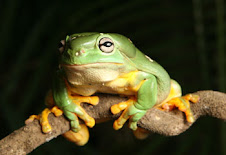
Toronto Zoo launches campaign to save frogs from chytrid fungus

article by Joanna Smith, TheStar.com

The Toronto Zoo chose "leap day" to raise awareness about an unprecedented crisis threatening amphibians around the world.

Cute gimmicks aside, zoo workers and local politicians gathered in front of frogs, toads and reporters yesterday to speak about the global amphibian problem and what they are trying to do about it.

"This is an extinction crisis that is unprecedented in the history of the world," said Bill Peters, national director of the Canadian Association of Zoos and Aquariums.

Frogs and other amphibians have managed just fine for the past 360 million years, but now up to half of the 6,000 known amphibian species face extinction within the next few decades. Pollution, loss of habitat and overharvesting continue to be problems. But the big killer around the world is actually an infection called chytrid fungus.

"That fungus attacks the skin of the frogs. It can no longer take in oxygen or water and they die," said Bob Johnson, curator of reptiles and amphibians at the zoo.

About 120 species have already gone extinct and many others are threatened around the world.

The killer infection originated in South Africa and spread quickly throughout Asia, Central and South America, and has arrived in the United States and Canada.

Johnson said the disease is especially difficult to deal with because even natural conservation parks and other wildlife havens provide no protection against it.

The zoo declared 2008 the Year of the Frog to celebrate the opening of its amphibian breeding centre to the public. The zoo launched a breeding program for Puerto Rican crested toads in 1986 and has since released 52,000 of the animals, once thought to be extinct, back into the wild.

The zoo will also open a frog rescue centre this summer to increase the number of animals they will be able to quarantine from the fungal disease. "There is a worldwide effort of scientists trying to fix the problems in the wild and we're holding the animals here in trust so that they can go back hopefully in the near future," Johnson said.

Natural Resources Minister Donna Cansfield said the province is ironing out legislation to protect 128 plant and animal species.


More suggested browsing:


Solar Intelligence Blog - For Alternative Energy News, World Peace Movements


A Green Realtor Blog - Eco-friendly Realty, Bio-realtors, Green building links

Sunday, December 23, 2007

Whooping Cranes on comeback trail creating hope among scientists

Whooping cranes lifting spirits; Scientists counting record numbers of endangered birds at Texas wintering grounds

Jason Unrau, THE CANADIAN PRESS
YELLOWKNIFE, N.W.T.

One of the most majestic and endangered birds on the continent appears to be making a slow flight to recovery, say experts who see whooping cranes returning to their Texas wintering grounds in record numbers this year.

The cranes were on the verge of extinction in 1941 - a mere 15 birds could be accounted for. But last week Tom Stehn, whooping crane co-ordinator for the United States Fish and Wildlife Service, confirmed 262 had arrived at the Aransas reserve on Texas's Gulf of Mexico coast and four more were in transit.

"The comeback is what makes them really a symbol of conservation in North America," said Stehn.

After centuries of being squeezed out of their habitats by expanding agriculture, collected as specimens by European travellers and eaten during the leaner times of colonial settlement, the near-mythical migratory birds appear now to have benefited from the concerted efforts of wildlife biologists and strict protective legislation.

Since 1982, Stehn has been counting whooping cranes as they complete the 4,000-kilometre, four-to- six-week journey from their nesting grounds in the Northwest Territories, inside Wood Buffalo National Park.

"Every whooping crane now came from the genetics of those 15 birds and, to be that close to extinction ... it's a tremendous success story," he said. "I'm probably so excited it makes it sound like we have a million of them. There are only 266, so you don't have to be a biologist to know that they're still extremely endangered."

But slowly increasing sea levels and their impact on the cranes' blue-crab-rich marshland on the gulf are causing Stehn some new concern.

And if marshes start drying up in Wood Buffalo National Park from warmer temperatures, "the crane could go downhill," he says.

Brian Johns, wildlife biologist and whooping crane co-ordinator with the Canadian Wildlife Service, monitors nesting habits and counts the nesting pairs and resulting offspring.

Johns counted 73 pairs that produced 80 offspring this year. Of those, 40 survived until migration and 39 made it from Wood Buffalo park to Texas last week.

Johns said the marshes where the cranes rear their young in Canada's largest national park have been under pressure from warmer springs and summers, but the climate change may actually be helping the birds thrive, at least temporarily.

"At hatching time is when a lot of young will die because of cool, wet weather during brooding time and the young can't keep warm on their own," Johns said.

"Now this June we didn't have any cold or wet weather - that was a good thing. But you can only tolerate no rain for a certain length of time, then the wetlands start drying up and the whole area gets more accessible to predators like foxes and wolves."

Back 150 years ago, the whoopers had more than just foxes and wolves to contend with. Settlers moving into the American Midwest transformed much of the wetlands to farmland. Cranes landing in a field to eat seeds often found themselves in a shooting gallery. It's believed the population was only around 1,300 even then - still considered endangered by today's standards.

Johns estimates that, at their height, whooping cranes numbered "a highly optimistic 10,000."

European curiosity-seekers chipped away at that over the centuries.

"I've got a listing of whooping crane specimens all around the world and you wouldn't believe it - there's several hundred of them in museums in Europe alone," he said.
Ron Heflin the canadian press file photo A whooping crane searches for food at the Aransas National Wildlife Refuge near Rockport, Tex. The Lone Star state's waters are wintering grounds for the species, with record numbers returning there this year.

December 17, 2007

Check also:

Solar Energy as a Path to Peace


Guide to Best Renewable Power Stocks


Writings of Yuya Joe

Sunday, December 16, 2007

Frogs and Toads are part of growing up

Frogs and Toads

by Chin Fah Shin

WHEN I was a kid, my family lived in a low-lying area on the outskirts of Kulim town, in the state of Kedah. Often, the area was flooded when there was heavy rain. Even when it rained lightly, puddles of water formed on the ground. And in the night, frogs and toads would call loudly. Sometimes their "chorus" could be quite deafening.


White-Lipped Frog (Rana chalconota). Copyright © Chin Fah Shin


One frog species, the Banded Bullfrog, Kaloula pulchra (family Microhylidae), was plentiful then. There seem to be fewer of them around now.

full article at:

http://www.geocities.com/RainForest/Vines/8983/frogs/frogs.html


Check also:

Solar Energy Website

Natural World Search Engine; Ecology, Environment and Scientific Websites


Search Engine for Nature and Environment Websites

Best homework tool, research scientific papers, find ecology info online, nature and environment websites, environmental blogs, natural world studies, ecology and politics, green energy activism, environmental movement, clean energy, environment and ecology research.

Custom Search


A cool Blog for all Frog Lovers

Nature and Ecology Links, Environmental Books, Nature Groups


Twitter / RBKC_Ecology

21st Century Architecture

Sacred Elephants

Twitter / Vertigal